
24 Jun How to Rent Tables and Chairs for Your Corporate Event
Planning a corporate event involves juggling countless details, and one of the most crucial decisions you’ll make is selecting the right tables and chairs. Whether you’re organizing a conference, gala, training session, or team-building event, your seating arrangement directly impacts attendee comfort, venue flow, and overall event success.
This guide walks you through everything you need to know about renting tables and chairs for corporate events. From understanding different styles and configurations to budgeting and logistics, we’ll help you make informed decisions that elevate your event.
Why Renting Makes Sense for Corporate Events
Purchasing tables and chairs for a single event rarely makes financial sense. Renting offers several advantages:
Cost-effectiveness: Avoid the upfront investment of purchasing furniture that you’ll only use occasionally.
Variety: Access different styles, sizes, and configurations to match each event’s unique requirements.
Storage solutions: Eliminate the need for warehouse space to store bulky furniture between events.
Flexibility: Easily scale up or down based on attendance numbers without being locked into a fixed inventory.
Professional quality: Rental companies maintain their inventory to ensure you receive clean, well-maintained furniture that reflects positively on your brand.
Types of Tables for Corporate Events
Selecting the right table style depends on your event format and objectives.
Banquet Tables
Rectangular tables (typically 6 or 8 feet long) work well for seated dinners, conferences, and networking events. They maximize seating capacity and create a formal atmosphere. Standard dimensions are 30 inches wide, accommodating place settings, centerpieces, and serving dishes.
Round Tables
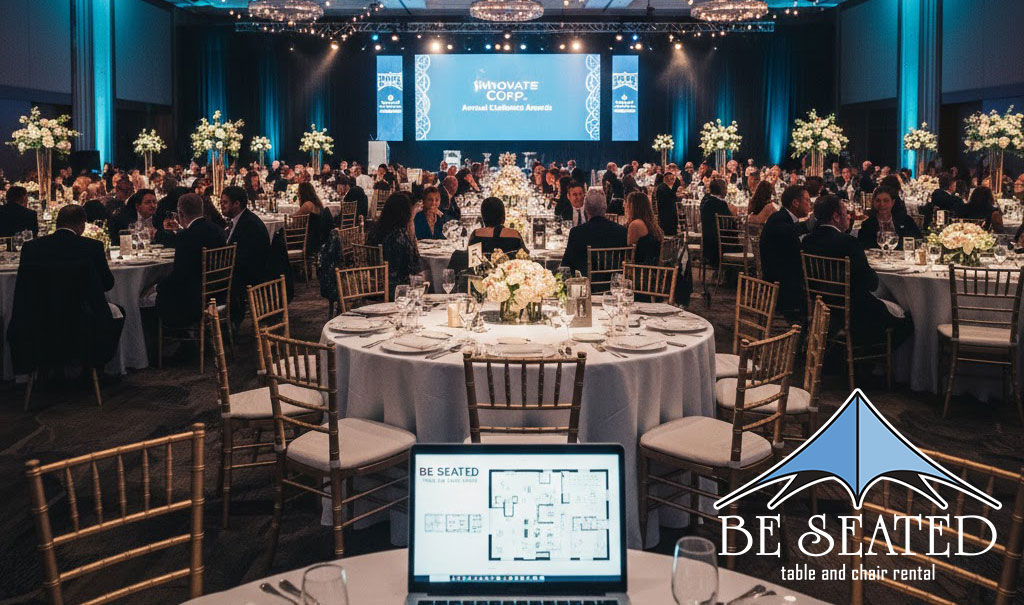
Available in various diameters (48, 60, or 72 inches), round tables encourage conversation and interaction. They’re ideal for galas, award ceremonies, and networking dinners where you want guests to engage with everyone at their table. A 60-inch round table comfortably seats 8-10 people.
Cocktail Tables
These tall, small-diameter tables (30 or 36 inches) are perfect for standing receptions, cocktail hours, and networking events. They provide a convenient surface for drinks and appetizers while encouraging mingling.
Conference Tables
Long rectangular tables create boardroom-style seating for training sessions, workshops, and strategic meetings. This setup facilitates presentations and group discussions.
Chair Options for Every Occasion
The chairs you select contribute significantly to attendee comfort and event aesthetics.
Chiavari Chairs
These elegant chairs feature a distinctive design with a ladder back and are available in multiple finishes (gold, silver, mahogany, white). They’re lightweight yet sturdy, making them popular for upscale corporate events and galas.
Folding Chairs
Practical and cost-effective, folding chairs work well for large conferences, training sessions, and outdoor events. Modern folding chairs come in stylish designs that look professional while remaining budget-friendly.
Padded Banquet Chairs
Offering superior comfort for longer events, padded banquet chairs feature cushioned seats and backs. They’re stackable for efficient storage and transport.
Bar Stools
When using cocktail tables, pair them with bar stools that match the table height. Choose between backless or backed options depending on the event duration and formality.
Calculating Your Furniture Needs
Determining the right quantity requires careful planning.
Attendance Numbers
Start with your expected guest count, then add 10-15% as a buffer. This accounts for last-minute additions and ensures you’re not caught short.
Event Format
Different event types require different seating ratios:
- Seated dinner: One chair per guest, with tables seating 8-10 people
- Conference/theater style: Rows of chairs without tables, maximizing capacity
- Classroom style: Tables with chairs on one side, allowing note-taking
- Reception: A mix of cocktail tables and limited seating (typically 30-40% of guests)
Venue Dimensions
Measure your venue carefully and account for:
- Dance floors or stage areas
- Buffet or bar stations
- Registration tables
- Traffic flow and emergency exits
- AV equipment and presentation areas
Most rental companies can provide floor plan assistance to optimize your space.
What to Look for in a Rental Company
Not all rental companies offer the same level of service or quality.
Inventory Quality
Visit the showroom or request photos of actual inventory items. Check for:
- Clean, well-maintained furniture
- Consistent styling across pieces
- Modern designs that align with your brand
- Backup inventory in case of damage
Delivery and Setup Services
Confirm what’s included in the rental fee:
- Delivery timeframes and flexibility
- Setup and breakdown services
- Placement according to your floor plan
- Pickup timing and procedures
Customer Support
Responsive customer service is essential when planning events. Look for companies that:
- Provide dedicated event coordinators
- Offer site visits for large events
- Can accommodate last-minute changes
- Have clear communication channels
Insurance and Liability
Understand the rental company’s policies regarding:
- Damage fees and replacement costs
- Insurance options for high-value events
- Liability coverage during delivery and pickup
- Weather-related cancellations for outdoor events
Budgeting for Table and Chair Rentals
Rental costs vary based on several factors.
Pricing Factors
- Furniture style: Basic folding chairs cost less than Chiavari chairs
- Quantity: Larger orders may qualify for volume discounts
- Rental duration: Multi-day events may incur additional fees
- Delivery distance: Remote venues may have higher delivery charges
- Setup services: Full-service setup costs more than drop-off delivery
Getting Accurate Quotes
Request itemized quotes from multiple companies that include:
- Per-item rental rates
- Delivery and pickup fees
- Setup and breakdown costs
- Damage waiver options
- Tax and additional fees
Cost-Saving Strategies
Reduce expenses without compromising quality:
- Book well in advance for better rates and availability
- Consider off-peak dates (avoid wedding season)
- Mix high-end and standard pieces strategically
- Negotiate package deals for complete event needs
- Use in-house furniture when venues offer it
Timeline for Booking Rentals
Secure your rentals early to ensure availability and better pricing.
3-6 months before: For large corporate events (200+ attendees) or events during peak season, start researching and booking rentals.
2-3 months before: Mid-sized events (50-200 attendees) should have rentals confirmed by this point.
4-6 weeks before: Finalize your floor plan and confirm final quantities with your rental company.
1-2 weeks before: Provide final attendance numbers and make any necessary adjustments.
2-3 days before: Coordinate delivery timing and setup details with your venue and rental company.
Matching Furniture to Your Brand
Your furniture choices should reinforce your company’s image and event theme.
Color Coordination
Select chair and linen colors that complement your brand colors. Many rental companies offer custom cushions or chair covers in specific colors.
Style Consistency
Ensure your furniture choices align with your event’s formality level:
- Formal galas: Chiavari chairs, round tables with floor-length linens
- Casual networking: Modern folding chairs, bistro tables
- Training sessions: Comfortable conference seating with ample workspace
- Outdoor events: Weather-resistant furniture with appropriate styling
Enhancement Options
Consider add-ons that elevate the experience:
- Chair cushions in brand colors
- Table linens and overlays
- Chair sashes or covers
- Specialty finishes (gold, acrylic, rustic wood)
Logistics and Day-of Coordination
Smooth execution requires attention to logistical details.
Venue Coordination
Communicate with your venue about:
- Loading dock access and restrictions
- Elevator availability and capacity
- Setup timeframes and restrictions
- Contact information for day-of coordination
Floor Plan Execution
Provide your rental company with:
- A detailed floor plan with table numbers
- Specific placement instructions
- Contact person for setup questions
- Walkthrough time before guests arrive
Backup Plans
Prepare for potential issues:
- Order 5-10% extra chairs as backup
- Have the rental company’s emergency contact information
- Plan for weather contingencies at outdoor events
- Know the policy for last-minute additions
Common Mistakes to Avoid
Learn from others’ experiences to prevent common pitfalls.
Underestimating space requirements: Tables and chairs need more room than you think. Account for traffic flow and comfortable spacing.
Forgetting about accessibility: Ensure pathways accommodate wheelchairs and meet ADA requirements.
Ignoring guest comfort: For events longer than 90 minutes, invest in comfortable seating options.
Booking too late: Popular dates and premium furniture styles book up quickly, especially during peak corporate event season.
Overlooking delivery logistics: Confirm your venue can accommodate delivery trucks and has adequate loading access.
Skipping the site visit: For large or complex events, walk through the space with your rental company to avoid surprises.
Make Your Next Corporate Event Seamless
Renting tables and chairs for your corporate event doesn’t have to be overwhelming. By understanding your options, planning ahead, and partnering with a reliable rental company, you can create a comfortable, professional environment that supports your event goals.
Start by defining your event format and expected attendance, then research rental companies that can meet your specific needs. Request quotes early, ask plenty of questions, and don’t hesitate to seek guidance from experienced event coordinators.
The right furniture choices will fade into the background, allowing your event’s content and connections to take center stage.
Sorry, the comment form is closed at this time.